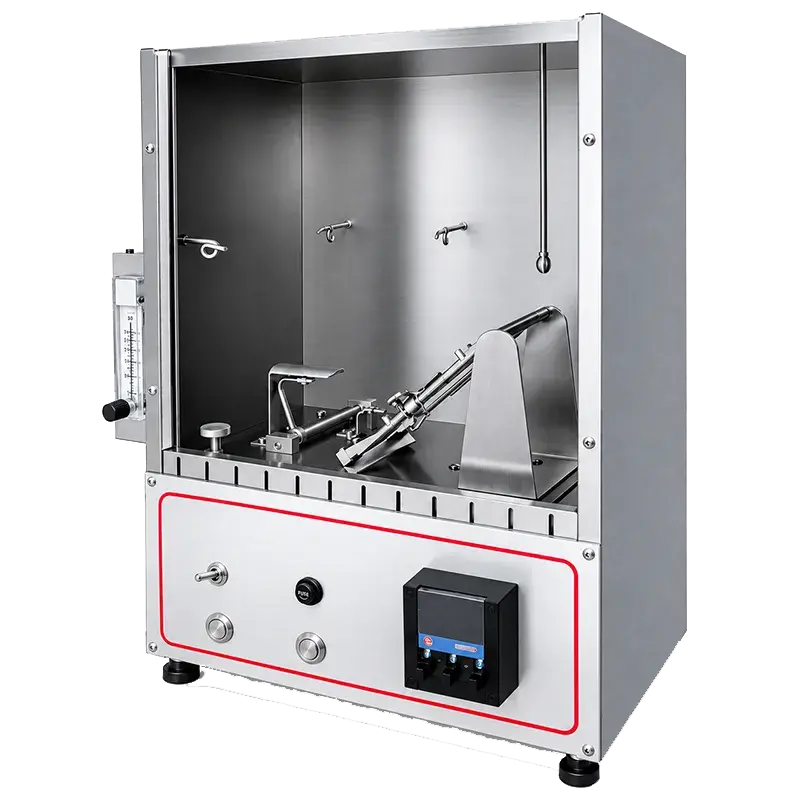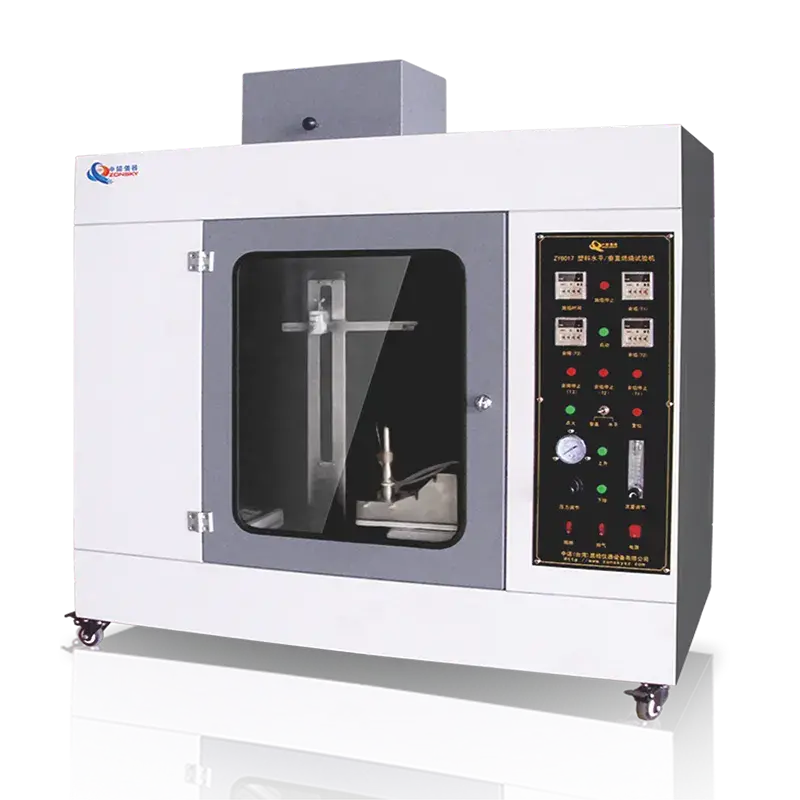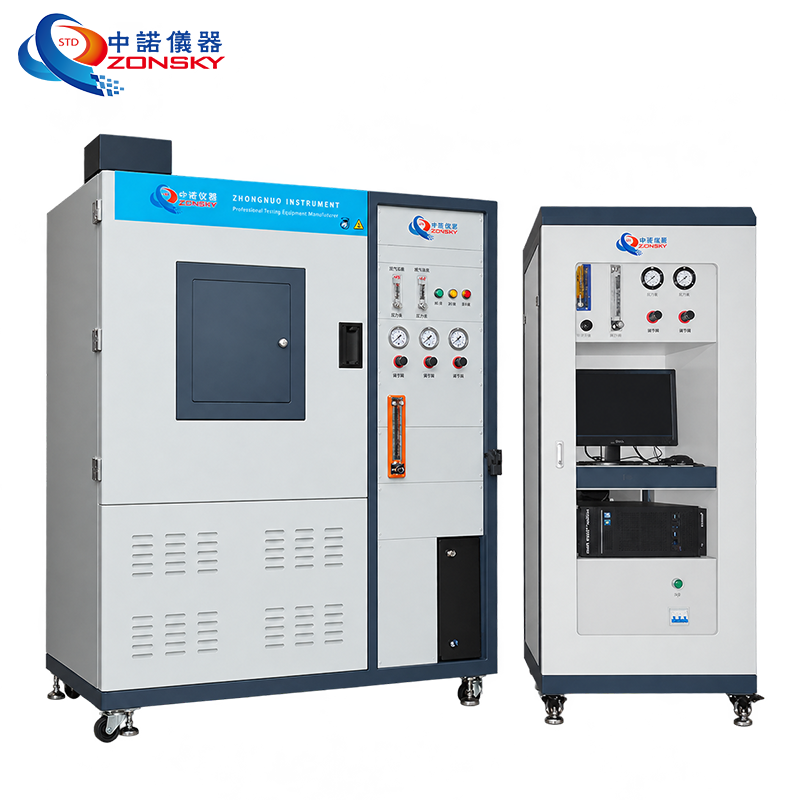
In modern fire safety, a harsh reality remains: it is often the dense smoke and toxic gases generated during combustion, rather than the flames themselves, that pose the most lethal threats. To curb fire hazards at the source, the NBS Smoke Density Test Apparatus has emerged as an indispensable precision instrument for laboratories, material R&D institutions, and third-party testing centers worldwide.
Wide Application & Precise Measurement
This apparatus is highly versatile, capable of accurately measuring the smoke density of various non-metallic materials, including plastics, rubber, textile coverings, painted surfaces, and wood. By simulating real combustion environments, it precisely measures the optical density of the generated smoke and uses the “Maximum Specific Optical Density (Ds)” as the core test result, providing a scientific and quantitative evaluation of the material’s smoke generation performance under specified conditions.
International Standards & Comprehensive Compatibility
In terms of standard compliance, the NBS Smoke Density Test Apparatus demonstrates superior professionalism and compatibility:
- ISO System: Fully complies with ISO 5659-1 (“Plastics – Smoke generation – Part 1: Guidance on optical-density testing”) and ISO 5659-2.
- ASTM System: Perfectly supports ASTM E662 (“Standard Test Method for Specific Optical Density of Smoke Generated by Solid Materials”).
Whether operating in a flameless (smoldering) mode or a flaming mode, the apparatus accurately determines the specific optical density of smoke generated by solid materials or components.
Expanded Applications & Empowering High-End Manufacturing
The NBS Smoke Density Test Apparatus is more than a basic testing device; it is a powerful tool driving safety upgrades in high-end manufacturing. In the European railway fire safety standard (EN 45545-2) and aerospace airworthiness verification (e.g., Boeing BSS 7238, FAR 25.853), the test data from this equipment directly determines whether materials can be safely installed in high-speed train carriages or aircraft cabins.
Toxicity Analysis Expansion for Comprehensive Protection
To meet stricter safety requirements, the equipment supports powerful future expansion. By adding a gas sampling device and integrating an FTIR (Fourier Transform Infrared Spectrometer) or gas detection tubes, it can perform qualitative and quantitative analysis of toxic gases in the smoke (such as CO, CO2, HF, HCl, HCN, NOx, and SO2). This not only makes material safety assessments more comprehensive but also provides critical data support for developing low-smoke, halogen-free, and eco-friendly flame-retardant materials.
Choosing the NBS Smoke Density Test Apparatus means choosing precision, compliance, and forward-looking safety protection.