
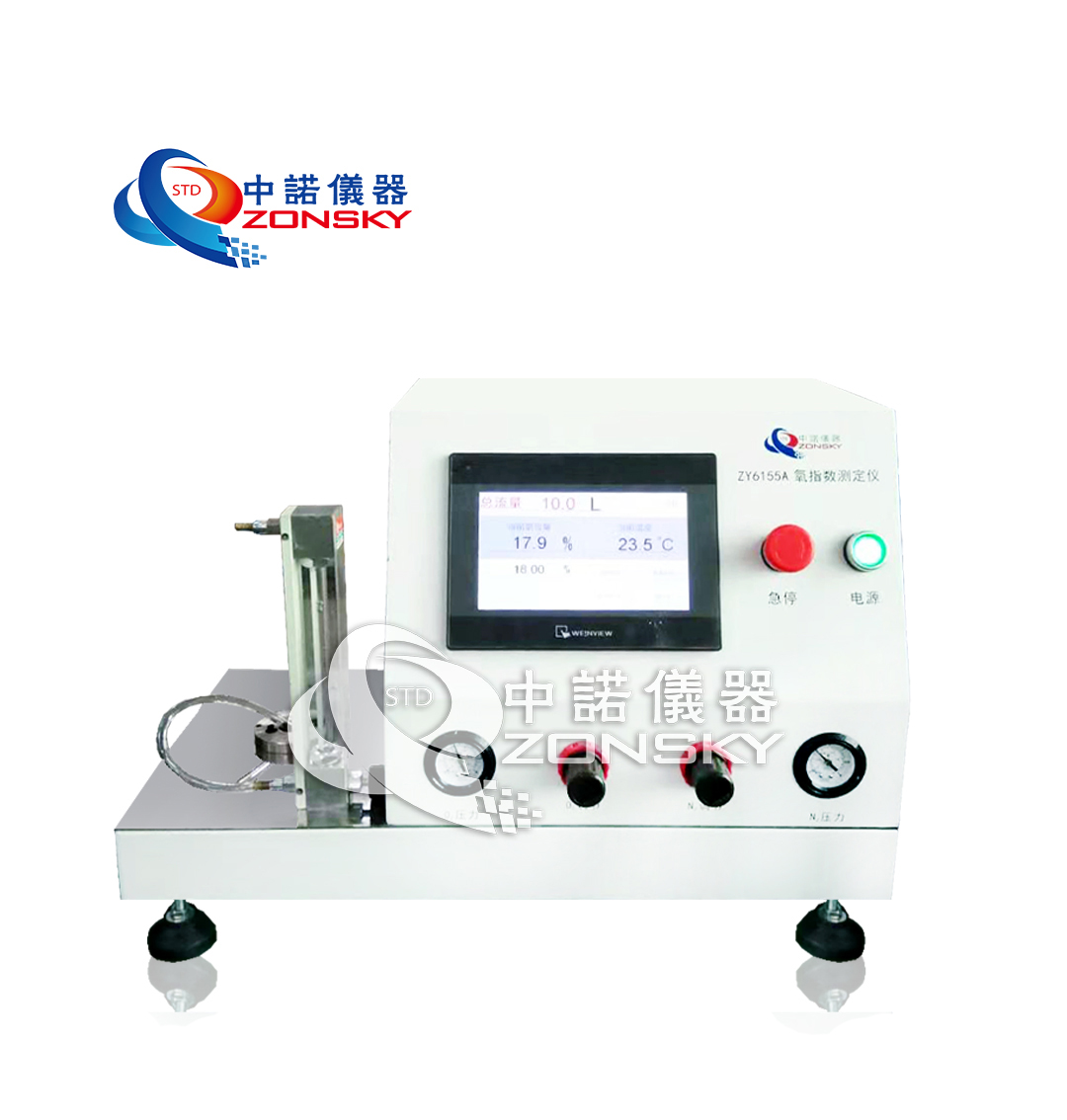
The Limiting Oxygen Index (LOI) is a laboratory test used to measure the relative flammability of materials, primarily plastics, polymers, and textiles.
It determines the minimum concentration of oxygen (expressed as a percentage) required to support the candle-like combustion of a material in a flowing mixture of oxygen and nitrogen.
The test is standardized under ASTM D2863 and ISO 4589.
Calculating the LOI
The LOI is expressed as a volume percentage using the following formula:
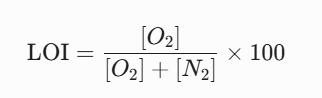
Where:
[O2] is the volumetric flow rate of oxygen.
[N2] is the volumetric flow rate of nitrogen.
What the Scores Mean
Because Earth’s ambient atmosphere consists of roughly 21% oxygen, a material’s LOI score immediately tells you how it will behave in a normal environment:
LOI < 21% (Flammable): The material requires less oxygen than what is present in standard air to burn. Once ignited, it will burn readily and continuously in a normal room.
LOI 21% – 28% (Slow-Burning/Marginal): The material may burn slowly or self-extinguish in normal air, depending on the exact conditions, but is still considered somewhat combustible.
LOI > 28% (Self-Extinguishing / Flame-Retardant): The material requires more oxygen than what is present in standard air to keep burning. If you remove the ignition source in a normal room, the fire will naturally go out.