
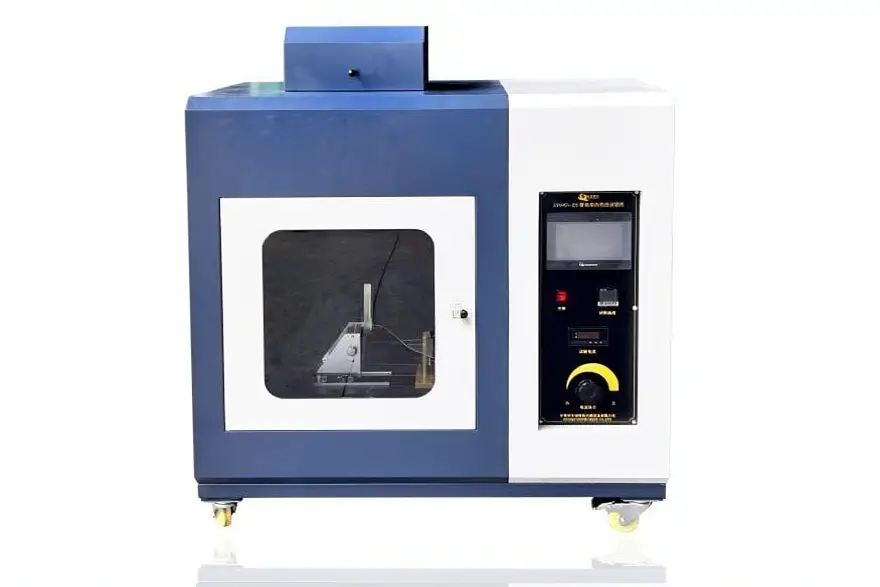
The Glow Wire Test is an electrical safety test designed to evaluate the fire hazard and flammability of plastic and insulating materials used in electronic devices and home appliances.
Its primary purpose is to simulate what happens inside an electrical device when a component malfunctions—such as an overloaded connection, short circuit, or resistor overheating—and begins to glow red-hot. The test assesses whether the surrounding plastic will catch fire, and if it does, whether it can self-extinguish and prevent the fire from spreading.
The Three Main Types of Glow Wire Testing
Depending on whether you are testing a finished product or raw plastic pellets, the industry uses three specific sub-standards:
GWT (Glow Wire Test for End Products – IEC 60695-2-11):
Performed on the final, finished product (like a washing machine switch or a computer connector casing). The result is a simple Pass or Fail at a chosen temperature.
GWFI (Glow Wire Flammability Index – IEC 60695-2-12):
Performed on raw materials (test plates of plastic). It measures the highest temperature at which the material can self-extinguish within 30 seconds without igniting the tissue paper underneath.
GWIT (Glow Wire Ignition Temperature – IEC 60695-2-13):
Also performed on raw materials. It measures the lowest temperature at which the material ignites and burns for more than 5 seconds while the heated wire is still in contact with it.