
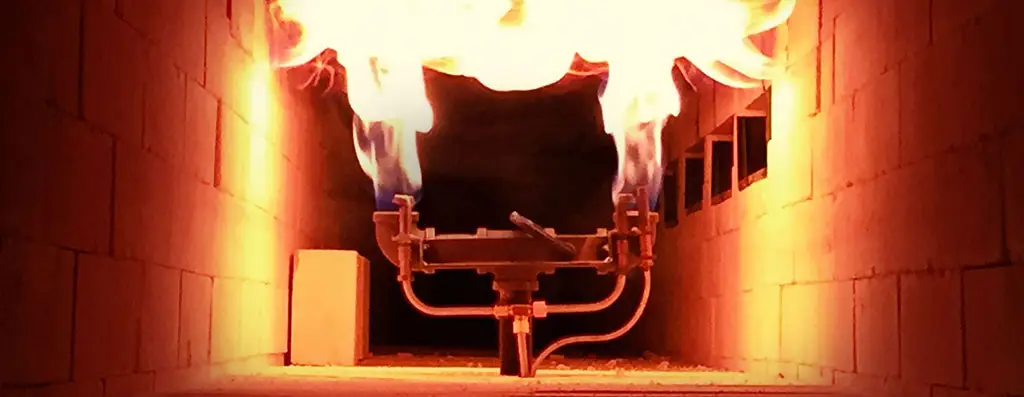
Invented in 1922 by Albert J. Steiner, an engineer for Underwriters Laboratories (UL), the steiner tunnel test evaluates two critical safety factors: how fast a flame spreads across a material and how much smoke the material generates when burning.
Now, the Steiner tunnel test is a widely recognized standard method used to measure how interior building materials—like wall coverings, ceilings, insulation, and plastics—react to fire. And the steiner tunnel test is officially standardized under two primary designations:
ASTM E84: Standard Test Method for Surface Burning Characteristics of Building Materials
UL 723: Test for Surface Burning Characteristics of Building Materials
The Key Metrics
The test assigns a material two specific ratings based on a comparative scale, where select grade red oak is rated at 100 (burns relatively easily) and inorganic fiber-cement board is rated at 0 (does not burn).
1. Flame Spread Index (FSI)
This measures how quickly flames travel across the surface of the material. A lower index means the material is more resistant to spreading a fire.
2. Smoke Developed Index (SDI)
This measures the concentration of smoke generated as the material burns. A lower index means less smoke is produced, which is crucial for visibility and preventing inhalation injuries during an evacuation. Most building codes require an SDI of 450 or less for interior finishes.