
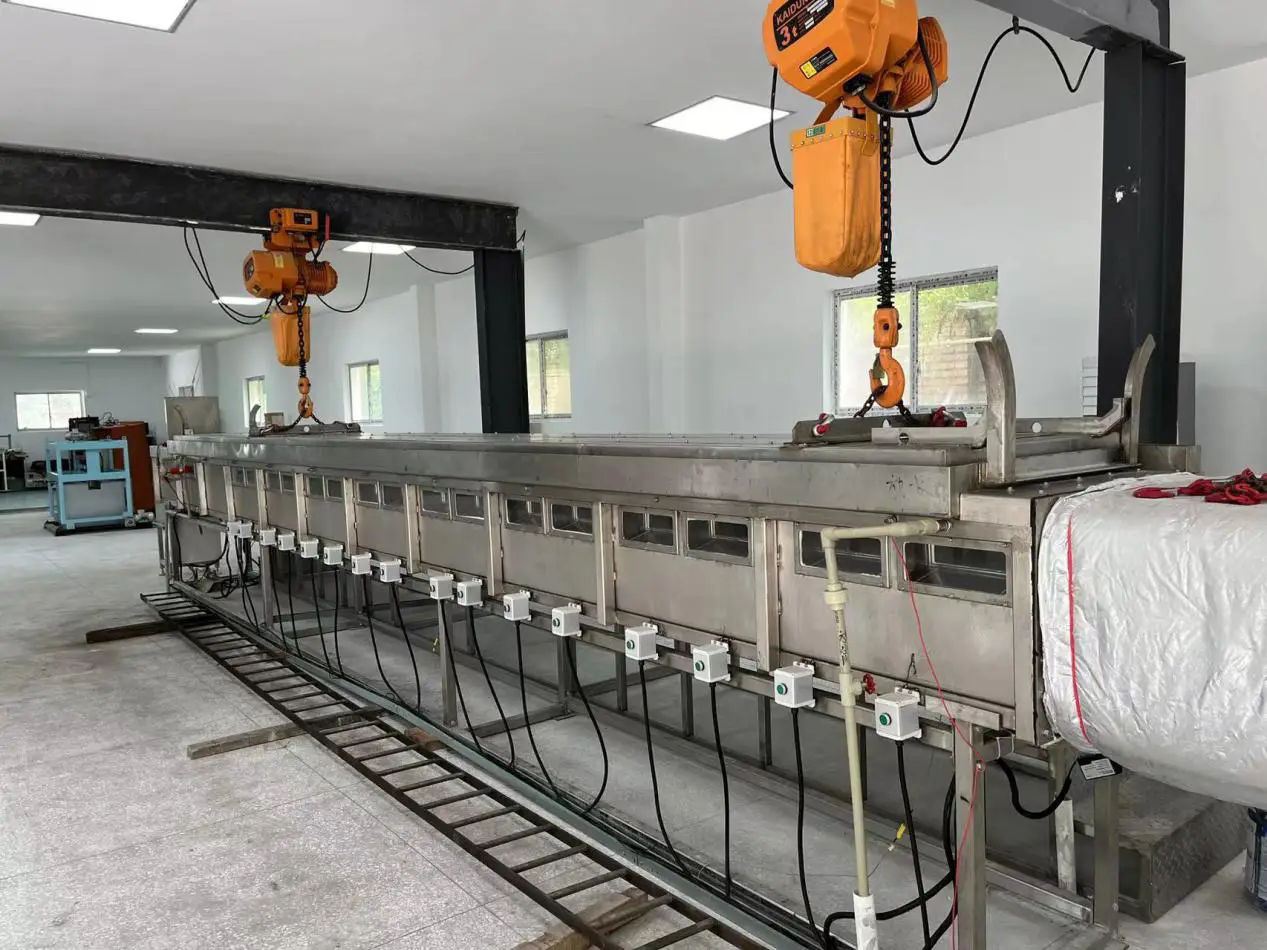
The Plenum Flame Test is a highly rigorous fire safety test standard designed specifically for cables and pipes routed through a building’s “plenum” spaces.
A plenum is the open area above a suspended ceiling or underneath a raised floor used for circulating air in heating, ventilation, and air conditioning (HVAC) systems. Because air actively flows through these hidden zones, a fire originating there can rapidly spread smoke and toxic fumes throughout the entire building.
To prevent this nightmare scenario, any communication, data, or power cables installed in these spaces must pass a dedicated plenum test – most notably NFPA 262 (formerly UL 910) – before earning a CMP (Communications Plenum) rating.
The Connection to the Steiner Tunnel Furnace
The plenum flame test uses a modified version of the exact same Steiner Tunnel apparatus used for testing wall and ceiling materials.
Instead of mounting a single solid panel to the top of the furnace, technicians lay a single layer of cables side-by-side across a 24-foot-long horizontal cable ladder. The ladder is positioned in the center of the tunnel, and the 300,000 BTU/hr gas flame is blasted directly onto the cables for 20 minutes—twice as long as the standard 10-minute material test.